


Virginia Brain Injury Lawyer
Fill out the form to connect with our legal team for a free consultation, we’ll respond within 1 hour during business hours. Or call us 24/7 at (757) 244-7000.
A brain injury can change everything. Know your rights and your path to recovery.





Table of Contents
Table of Contents
A traumatic brain injury can disrupt your life completely, and the path forward can feel entirely uncertain. Maybe your memory slips. Words don’t come as easily. You’re tired in ways that rest doesn’t fix. But you’re still you, and you deserve a team that sees that, fights for it, and never treats your injury like just another case.
At the Brain Injury Law Center, for nearly five decades, we’ve helped people living with traumatic brain injuries rebuild their lives, one step at a time: legally, financially, and emotionally.
Founded by Stephen M. Smith, a nationally and internationally recognized brain injury attorney, our firm brings the full weight of its experience to every client we serve.
We know brain injuries don’t follow a script. And neither should your legal team. Reach out to a Virginia brain injury lawyer at (757) 244-7000 or fill out our quick online form to learn more about how a traumatic brain injury attorney can support you when you schedule a free, confidential conversation with our team.
“The entire staff was friendly and able to walk me through the entire process. Attorney David Holt was easy to communicate with and able to get me a fair settlement for my case. I would highly recommend them.”
- Jeff I. | Client
What Is a Traumatic Brain Injury?
A traumatic brain injury is a type of Acquired Brain Injury (ABI). It happens after birth when a physical injury stops the brain from working normally.
When brain damage occurs before birth, it's known as an Inborn Brain Injury. Luckily, the law allows those who have suffered a TBI because of someone else's carelessness, wrongdoing, or inaction to seek money for their injuries and losses, whether it was acquired or inborn.
Acquired Brain Injury
An acquired TBI happens when there's an outside, physical hit, like from car accidents, falls, assaults, or other sudden events.
It's often called a "silent injury" because it can be hard to know if the brain, which is very delicate, has been hurt. Depending on how the injury happened, it can range from mild to severe and deeply affect one or more parts of the brain.
Even mild cases can be life-threatening. Brain injuries that are considered acquired but not traumatic are those caused by strokes, infections, lack of oxygen, and medical mistakes.
For example, if a newborn doesn't get enough oxygen, like during a delayed C-section, the lack of oxygen to the brain can lead to problems or cerebral palsy. Too much use of tools like forceps or vacuums is also a common medical error that can cause newborn brain damage.
Inborn Brain Injuries
These types of traumatic brain injuries happen before birth and may be caused by genetic brain problems, fetal alcohol syndrome, brain damage from drug abuse (neonatal abstinence syndrome), illness during or around birth, or lack of oxygen during or around birth.

Leading Causes of Traumatic Brain Injuries
Every year, over a million Americans walk into emergency rooms because of a traumatic brain injury. Some go home the same day. Others stay for weeks. Around 230,000 are hospitalized and survive, but 80,000 leave the hospital with lasting disabilities. Tragically, 50,000 people don’t survive at all.
It's a common misunderstanding that TBIs only happen when a person gets a direct hit to the head and loses consciousness.
However, a TBI can also happen when the brain is forcefully shaken in one or more directions during impact or sudden stopping. When this happens, the soft brain tissue gets damaged when it hits the inside of the skull. This kind of injury often happens without losing consciousness. For example, severe whiplash is a common cause of TBI.
Here are some of the most common causes of traumatic brain injuries:
- Motor vehicle crashes: Account for nearly 50% of all TBIs. This includes cars, trucks, motorcycles, bicycles, and pedestrians hit by vehicles.
- Falls: The leading cause of TBI among adults aged 65 and older.
- Transportation accidents: The top cause of TBI for people under age 65.
- Sports and recreational activities: Estimated to cause around 300,000 brain injuries each year. Winter sports like skiing and ice-skating alone account for nearly 20,000 of these injuries.
Other causes of TBIs include assaults, work/construction site accidents, medical malpractice, and near-drowning experiences.
Today, about 5.3 million people in the U.S. are living with a brain injury-related disability. Men are more likely to suffer a TBI than women, with young adults between 15 and 24 being the highest risk group. However, toddlers under 5 and seniors over 75 are also at greater risk.
Types of Traumatic Brain Injuries
When a serious brain injury like a TBI isn't found and treated quickly, it can cause lasting problems that severely hurt a person's life. Whether it's mild or severe at the start, a brain injury should be diagnosed and treated as soon as possible.
Generally, TBIs fall into two main types:
- Closed Brain Injury: These injuries happen when the skull isn't broken or pierced. Instead, the brain is injured when it's shaken violently inside the skull.
- Penetrating Brain Injury (Open Head Injury): These injuries occur when something breaks through the skull and damages the delicate brain inside.
Within these two broad categories, there are many different specific types of injuries, each with its own level of seriousness and potential long-term effects. Here are a few examples:
- Concussions: A concussion is a mild traumatic brain injury (MTBI) that affects how the brain works. Concussions happen when an outside force hits the head or when the skull and brain shake back and forth quickly. They can happen even after a small bump to the head and can be hard to notice when they don't involve losing consciousness.
- Minor Head Injury: The tissue between the scalp and skull has many blood vessels that can cause bad bruising or bumps when hit. These injuries can often be treated with an ice pack, but it's always best to get medical help any time the head is hit.
- Hematoma: This is when blood collects outside of blood vessels, forming a clot. In the brain, a hematoma can put pressure on brain tissue, causing damage.
- Edema: This simply means swelling. Brain swelling after an injury can be very dangerous because the skull doesn't have much room for expansion, and the pressure can damage brain cells.
- Hemorrhage: This refers to bleeding in or around the brain.
- Diffuse Axonal Injury (DAI): This is a very serious type of TBI that happens when the brain is violently shaken or twisted. It causes widespread tearing of the brain's long nerve fibers, which can lead to widespread brain damage.
- Hypoxic and Anoxic Brain Injuries: These injuries occur when the brain doesn't get enough oxygen (hypoxia) or gets no oxygen at all (anoxia). While not always caused by direct impact, they can result from events like near-drowning, choking, or medical complications.
- Secondary Impact Syndrome: This rare but very dangerous condition happens when someone suffers a second head injury before fully recovering from an earlier concussion. This can lead to rapid and severe brain swelling, often with devastating consequences.
Regardless of which kind of injury it is, brain trauma can be serious or fatal, even when there are no symptoms.
What Are the Different Levels of Brain Injury?
Brain injuries are classified by severity, and that classification affects everything from the course of treatment to the value of a legal claim. Virginia courts and insurance companies pay close attention to how an injury is graded, which makes accurate documentation from the start critically important.
Mild TBI
Despite the name, a mild traumatic brain injury is not minor. Mild TBIs, which include concussions, can cause persistent headaches, memory problems, difficulty concentrating, and mood changes that last months or years.
Many mild TBI victims look fine on the outside, which is exactly why insurance companies undervalue these claims. Symptoms may not appear immediately after the injury, and standard imaging often comes back normal even when significant damage has occurred.
Moderate TBI
A moderate brain injury typically involves a loss of consciousness lasting between 30 minutes and 24 hours, or post-traumatic amnesia lasting up to a week. Moderate TBIs often require hospitalization and rehabilitation, and survivors may experience long-term cognitive, physical, and behavioral changes.
Severe TBI
Severe brain injuries involve extended unconsciousness or coma, and often result in permanent disability. The financial and personal costs of a severe TBI are enormous, including ongoing medical care, in-home assistance, lost earning capacity, and a lifetime of diminished quality of life, all of which must be accounted for in a legal claim.
Virginia law allows injured victims to pursue compensation at every level of severity. The challenge in mild and moderate cases is proving the full extent of harm when symptoms are invisible. The Brain Injury Law Center works with neurologists, neuropsychologists, and life care planners to document what scans cannot show.
Once immediate medical care is underway, it’s critical to speak with a knowledgeable Virginia brain injury attorney who understands the complexities of traumatic brain injuries. At the Brain Injury Law Center, our team brings nearly five decades of experience and a track record of more than $1 billion recovered for our clients.
We work closely with medical professionals to evaluate your diagnosis and build a clear case for the compensation you deserve. The sooner your symptoms are recognized and documented, the sooner we can begin pursuing the resources you need for recovery and long-term care.
Call our team today at (757) 244-7000 or reach out to us online.
Common Brain Injury Symptoms
Traumatic brain injury symptoms differ for each individual and can worsen over time. Catching these symptoms sooner rather than later is critical for preventing future damage. Unfortunately, symptoms are not easy to spot; even medical exams administered by experts aren’t flawless.
It’s not uncommon for early characteristics of a TBI to be missed if they have not yet fully developed. This makes it all the more prudent to keep a close watch for signs of a TBI after an accident.
TBI effects and signs can include:
- Persistent headache
- Coordination problems
- Memory loss
- Difficulty sleeping
- Dizziness
- Nausea
- Light sensitivity
- Seizures
- Vision problems
- Depression
- Change in temperament or personality
Long-Term Effects and Symptoms of Traumatic Brain Injuries
Traumatic brain injuries don’t just damage the ability to live a normal day-to-day life. The medical expenses involved in treating a victim of TBI can be staggering, draining the finances of families who are already suffering.
Long-term physical and mental disabilities or changes are not uncommon, and a victim’s quality of life can be profoundly affected. He or she may be unable to function or work normally.
The types of symptoms and long-term effects of a mild traumatic brain injury can include:
- Cognitive Defects: Coma, short- or long-term memory loss, shortened attention span, problem-solving and judgment deficits, loss of space and time perception.
- Motor Sensory Complications: Weakness, full or partial paralysis, poor balance and coordination, spasticity, reduced endurance, tremors, problems swallowing, seizures.
- Perceptual and Sensory Defects: Loss or change in sensations, tastes, hearing, touch, smell, and vision problems.
- Behavioral/Psychological: Mood swings, agitation, anxiety, depression.
- Language and Communication Problems: Difficulty speaking, writing, reading, planning, communicating, or identifying objects.
- Functional Complications: Difficulty with daily activities such as bathing and dressing, organizational problems.
- Social and Psychiatric Changes: Problems understanding or interacting in social situations, irritability, decreased motivation, depression, anxiety.
- Traumatic Epilepsy: For people with a mild TBI, the chance of developing seizures later is about 2%. That risk rises to 4% for moderate injuries and jumps to over 15% for those with severe brain injuries.
- Loss of Life: Approximately 68,665 people in the United States died from TBIs in 2023.
Hear From a Virginia Brain Injury Attorney
The long-term effects of a traumatic brain injury are often the hardest part of a claim to quantify. Cognitive changes, behavioral shifts, and the inability to return to work do not always show up on a scan, yet they represent some of the most significant losses a survivor faces.
Attorney David Holt discusses traumatic brain injury litigation on the Cases for Causes podcast. He explains how these claims are evaluated, how insurers defend them, and what it takes to pursue compensation that reflects the full extent of the harm.
If you or someone you love is dealing with the aftermath of a brain injury in Virginia, listen here.
Steps to Take Immediately Following Any Type of Head Injury
Taking quick action after encountering someone who has experienced a head injury is imperative to their health. In many cases, it can mean the difference between living a full life or one that is extremely impaired.
The earlier the treatment is given, the greater the chance of avoiding brain damage. Symptoms can take time to manifest after a head injury, sometimes progressively getting worse and leading to extensive brain damage.
If you suspect a person has suffered any type of brain injury, you should:
- Sit the victim down to make sure they are stable and safe.
- Look for a scalp wound; if present, apply a cloth and pressure to the wound.
- Give the victim something cold to hold against the wound.
- Gently check to see if the victim is alert, coherent, and responsive. Look for dizziness or nausea, loss of memory, headaches, and confusion.
- Seek immediate help if symptoms worsen, such as increased drowsiness, confusion, dizziness, headaches, vomiting, double vision, difficulty walking, or speaking.
- Seek immediate emergency care if the victim is unresponsive or has a deteriorating level of responsiveness, leaking blood or watery fluid from the nose or ears, or unequal pupil size.
If you believe the person is paralyzed, non-responsive, or has a neck injury, you should not move them, as this could worsen their situation. Call emergency care immediately if this is the case.
How a Virginia TBI Attorney Helps To Build Your Case
After a traumatic brain injury, just getting through the day can be tough. The idea of a legal case on top of everything else you’re dealing with might feel like too much, and that’s exactly why we’re here.
At the Brain Injury Law Center, this isn’t new to us. Our traumatic brain injury lawyers have spent decades helping survivors and families like yours, and we know how to take that legal weight off your shoulders so you can focus on what matters: healing.
Here’s what we do when we take on your case:
Step 1: Thorough Investigation
We'll carefully investigate the accident that caused your TBI. This includes gathering evidence like police reports, witness statements, accident reconstruction, and any available video footage. Our team leaves no stone unturned to build the strongest case possible.
Step 2: We Work With Your Doctors and Ours
These cases often involve symptoms that aren’t visible on scans or easily explained, things like memory issues, fatigue, or personality changes. That’s why we collect detailed medical records, consult with trusted specialists, and make sure every short- and long-term effect is clearly documented. By doing so, a Virginia traumatic brain injury attorney builds the foundation of what you’re suffering and connects it to your TBI.
Step 3: We Determine Who’s Responsible for Your Injury
Whether it’s a driver, property owner, company, or another party, we’ll uncover who caused your injury and hold them accountable.
Proving fault in a brain injury case isn’t always straightforward. It takes legal experience, investigation skills, and an understanding of how brain trauma can be linked to someone else’s negligence. We make sure the right people are held responsible.
Step 4: We Calculate What You’ve Lost and What You’ll Need
Your case isn’t just about bills you’ve already paid. It’s about your future. That includes rehab costs, lost income, ongoing care, and the emotional toll that comes with living life after a brain injury. Many of the real costs don’t show up right away.
You may need help returning to work, modifying your home, or covering therapies that insurance won’t fully pay for. We make sure none of these needs are overlooked.
Step 5: We Go to Court If That’s What It Takes
Most brain injury cases are resolved through settlement, but not all of them. If the other side refuses to take your injuries seriously or offers less than you need to move forward, we are fully prepared to take your case to trial.
Our team has years of courtroom experience and a long history of winning significant verdicts for clients. When it comes to protecting your future, we don’t back down.
How Is Liability Established in a Virginia Brain Injury Case?
Establishing liability in a brain injury case requires proving that another party's negligence or wrongful conduct directly caused the injury. In Virginia, that means demonstrating four things:
- The responsible party had a legal duty to act with reasonable care;
- They failed to meet that duty through a specific action or failure to act;
- That failure directly caused the brain injury; and
- The injury resulted in measurable harm, including medical expenses, lost income, and long-term impairment.
What makes brain injury cases particularly challenging in Virginia is the state's contributory negligence rule. Virginia is one of only a handful of states where an injured person found even one percent at fault for their own injury cannot recover any compensation.
Insurance companies and defense attorneys use this rule aggressively, looking for any evidence that the injured person contributed to the accident or failed to take reasonable precautions.
The Brain Injury Law Center investigates every aspect of the incident to establish the other party's fault clearly. That investigation often includes:
- Accident reconstruction,
- Review of surveillance footage,
- Examination of maintenance and inspection records,
- Medical expert analysis connecting the mechanism of injury to the neurological damage that followed, and
- Witness interviews and deposition testimony.
Virginia's contributory negligence standard makes early legal representation critical. The sooner a Virginia brain injury lawyer is involved, the harder it becomes for the other side to construct a fault argument that eliminates a victim's right to recover.
What Types of Legal Claims Arise From Brain Injuries in Virginia?
Brain injuries happen in many different circumstances, and the type of legal claim depends on how the injury occurred and who was responsible. Virginia law recognizes several distinct theories of liability that apply to TBI cases.
Negligence claims are the most common. These arise when a driver, property owner, employer, or other individual fails to exercise reasonable care and that failure causes a brain injury. Car accidents, truck collisions, and motorcycle crashes account for a significant share of serious TBIs in Virginia.
Premises liability claims arise when a brain injury occurs on someone else's property due to a dangerous condition the owner knew about or should have known about. Slip and fall accidents, inadequate lighting, and poorly maintained surfaces that cause falls are common examples.
Product liability claims apply when a defective product causes or contributes to a brain injury. Defective helmets, faulty vehicle components, and dangerous equipment are examples of products that can fail in ways that cause or worsen traumatic brain injuries.
Medical malpractice claims arise when a healthcare provider's negligence causes a brain injury. Surgical errors, anesthesia mistakes, failure to diagnose a stroke or brain bleed, and birth injuries involving oxygen deprivation all fall into this category.
Workplace injury claims may support a third-party lawsuit when a brain injury occurs on the job due to the negligence of someone other than the employer. Construction accidents, equipment failures, and falls from heights are among the most common workplace TBI scenarios in Virginia.
Wrongful death claims are available when a brain injury proves fatal. Virginia law allows the surviving spouse, children, or parents of the deceased to pursue compensation for financial losses and the emotional impact of the loss.
The Brain Injury Law Center has handled brain injury cases across all of these claim types throughout Virginia. Each requires a different investigative approach and legal strategy, and our attorneys have the experience to navigate them.
The High Costs of Treating a TBI
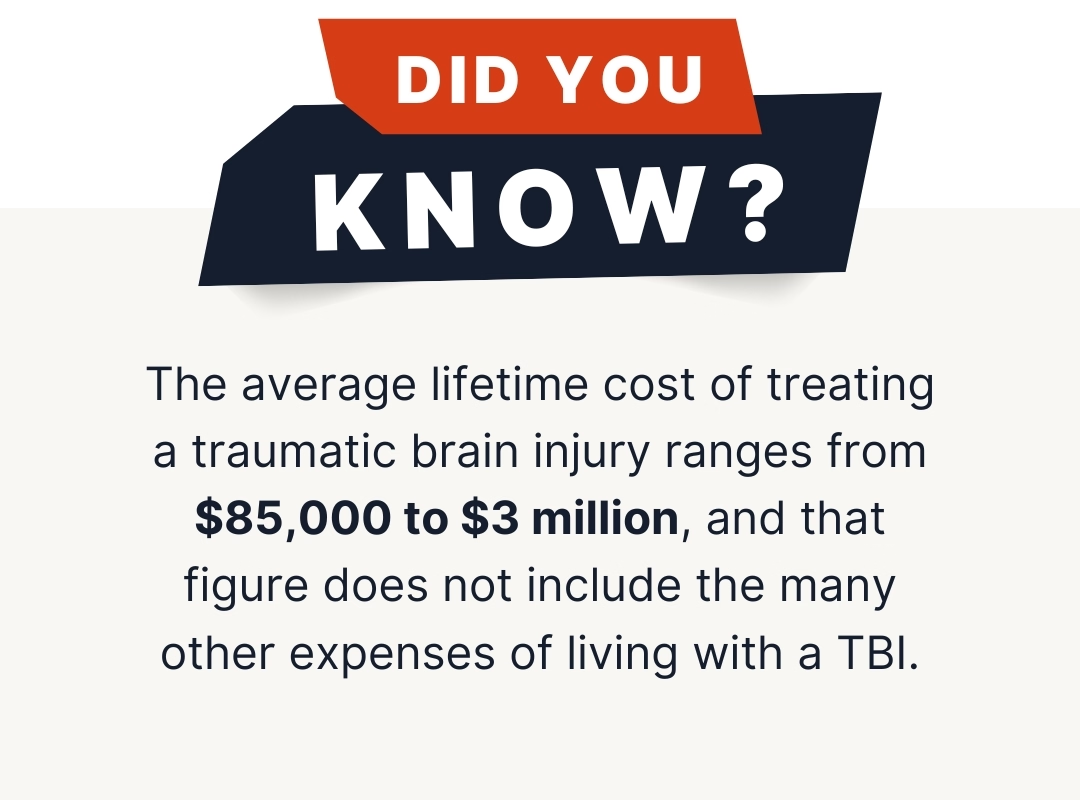
Multidisciplinary treatment and care are absolutely vital for the best possible outcome after a TBI injury. However, this critical care comes with an incredibly high price tag, often placing a massive financial burden on the victim and their family for years to come.
That’s why, as you focus on healing, it’s crucial to have a Virginia traumatic brain injury attorney by your side. The right lawyer can help you pursue the full compensation you deserve to manage the mounting costs and protect your future.
The following treatments are most often associated with TBI:
- Physical care — such as nutritional and medication needs.
- Pain management — medication and other methods for alleviating the pain.
- Psychological care — includes the administration of various tests to identify any behavioral and/or emotional problems as well as necessary counseling.
- Self-care skills — such as bathing, grooming, and feeding.
- Communication skills — speech therapy and alternative modes of communication.
- Mobility skills — may include wheelchair use or walking device.
- Socialization skills — focuses on interactions with family and community.
- Cognitive skills — to enhance memory, problem solving, concentration, and other areas of cognitive functioning affected by the injury.
- Vocational skills — work-related training.
- Family support — includes patient/family education and training on the numerous issues relevant to living with a brain injury.
"Before you hire a lawyer, make sure your lawyer is an experienced trial lawyer, and more importantly, a brain injury lawyer. You should ask your lawyer if they have won a brain injury case before and what their largest verdict is.
A lawyer cannot obtain a large settlement on a traumatic brain injury case if they cannot take that case to trial. Insurance companies will never pay the right amount to those individuals represented by a lawyer who has not gone to trial."
- Attorney Stephen Smith | Founder of Brain Injury Law Center
Types of Compensation a Traumatic Brain Injuries Lawyer Can Help You Recover
After a traumatic brain injury, a lawsuit isn’t just about recovering money; it’s about protecting your future. The costs of care can last a lifetime, and without the right legal team, many families end up paying out of pocket for expenses they never expected.
An experienced Virginia traumatic brain injury lawyer will fight to make sure every dollar of your injury is accounted for, both now and years down the line. That includes:
- All medical expenses, including ambulance rides, surgeries, hospital stays, and more.
- Rehabilitation and therapy costs.
- Property damage.
- Lost income and reduced ability to earn in the future
- Pain, suffering, and emotional distress.
At the Brain Injury Law Center, this is the work we were built for. From our office in Hampton, Virginia, we’ve helped thousands of brain injury survivors across the country get the compensation they need to rebuild. Founder Stephen M. Smith has handled these cases for nearly five decades and has secured millions for clients facing challenges just like yours.
If you’re recovering from a traumatic brain injury, having the right legal support can make all the difference. According to a national Martindale-Nolo study, hiring a personal injury lawyer is the most important step you can take to improve your chances of receiving compensation.
More than 90% of people with legal representation received a settlement or award, compared to only about half of those who handled their claims on their own.
Verdicts and Settlements Won By Our Traumatic Brain Injury Lawyers
It's hard to imagine the road ahead after a brain injury, but you don't have to walk it alone. At The Brain Injury Law Center, a Virginia traumatic brain injury lawyer is here to stand by your side.
We're proud to have recovered over $1 billion for our clients because every single case is about helping real people rebuild their lives. Take a look at some of the ways we've helped others get the financial support they needed:
Train Accident $60.26 Million
A jury awarded more than $60 million to our client who suffered a head injury when a train derailed and crashed into the gas station where he was working.
Motorcycle Accident $14.59 Million
Our client suffered a brain injury in a motorcycle accident caused by a defective tire product. The motorcycle dealer and the tire manufacturer both agreed to settle.
Largest Slip & Fall Verdict in Virginia History $12.26 Million
In this historic case, we obtained a favorable outcome for our client who suffered a mild traumatic brain injury during a fall.
Car Accident $10 million
After litigation, a company paid $10 million to a man who suffered a mild traumatic brain injury in a crash.
Advocates for Brain Injury Victims and Families
Your Recovery Starts With a Free Consultation

Your Advocates for Brain Injury Victims Nationwide
Brain injuries are life-changing and often invisible, impacting victims and their families emotionally and financially. That is why traumatic brain injuries are sometimes described as “invisible injuries” and a “silent epidemic."
At the Brain Injury Law Center, we are dedicated to helping victims and their loved ones secure the compensation they deserve.

Client Reviews

Excellent law firm. The staff was courteous and professional. The attorney who handled my case was truly top notch. I strongly recommend The Brain Injury Law Center/Smith Law Center for your personal injury case.
- D. Woodfin
David and his team did a wonderful job representing our family in the wrongful death lawsuit for our son. He and his team worked tirelessly and became like family to us. He represented my son with dignity, respect and made an effort to know him and the person he was and still is. Thank you, David, for all you did for us, for the positive outcome, and for always keeping the family’s best interests at hand.
- D. Monticello
Very pleased with this law firm. Staff is very courteous and professional. I'd like to thank Stuart Gill who did an AMAZING job on my case. If you ever need legal help, LOOK HIM UP!!
- D. Whitley
Your Recovery Starts With a Free Consultation
Advocates for Brain Injury Victims and Families
Your Recovery Starts With a Free Consultation
Why Choose Brain Injury Law Center?
Frequently Asked Questions
Is impact or force necessary to cause a traumatic brain injury?
No. Traumatic brain injuries can also be caused by rapid acceleration or deceleration forces that cause the brain to collide within the skull. Motor vehicle accident victims often suffer TBI from this type of event.
Can one suffer from TBI without having lost consciousness in an accident?
Yes. Despite popular perception, traumatic brain injuries are commonly suffered without the victim losing consciousness.
How long do I have to file a TBI claim in Virginia?
Virginia's statute of limitations for personal injury claims is two years from the date of the injury. For wrongful death claims, the two-year period begins from the date of death. Missing this deadline eliminates your right to seek compensation regardless of how strong your case is.
Some exceptions apply, including cases involving minors, so contacting an attorney as soon as possible is important.
What are the benefits to filing a lawsuit for my brain injury?
Filing a lawsuit after a brain injury may allow you to secure financial compensation not just for your injuries, but also for lost wages, diminished earning potential, pain and suffering, and more. It could help you receive top-grade medical care that could make a major difference in the recovery process.
In many instances, filing a TBI lawsuit can also help improve overall safety standards, uncover other instances of injury, and prevent other cases from occurring.
Can I sue if a loved one died from a traumatic brain injury?
Yes. Virginia's wrongful death statute allows surviving family members to pursue compensation when a brain injury proves fatal due to another party's negligence. Eligible claimants include the surviving spouse, children, and parents of the deceased. A wrongful death claim can recover compensation for funeral expenses, lost financial support, and the emotional impact of the loss on the family.
I got into an accident several years ago. Can I bring a claim for my brain injury?
Each state has a statute of limitations on filing a brain injury claim, which is a timeframe that does not begin until your injury is discovered, regardless of when it occurred.
For example, in Virginia, the statute of limitations is two years, meaning that you have two years from the time you discover your brain injury to file a lawsuit. Contact a Virginia traumatic brain injury lawyer to learn more.
Is a concussion a traumatic brain injury?
It absolutely is, although it’s a more common, mild form of TBI. Although concussion symptoms can be mild and disappear without treatment after a short time, severe concussions can lead to long-lasting damage that lingers for months or even years after the injury occurred. This damage may manifest in symptoms like dizziness, severe headaches and more.
What are the top questions to ask a Virginia brain injury lawyer?
Ask how much experience the attorney has with traumatic brain injury (TBI) cases and what results they have achieved. Find out whether they work with medical experts like neurologists, neuropsychologists, and life care planners to prove long-term harm.
Because Virginia follows a strict contributory negligence rule, ask how they handle fault disputes and protect your right to recover. You should also ask whether they are prepared to take the case to trial and what verdicts they have secured in brain injury cases.
What should I look for when hiring a Virginia TBI attorney?
Look for an attorney with specific experience in traumatic brain injury litigation, not just general personal injury work. Brain injuries involve complex medical evidence that requires attorneys who understand how to work with specialists, challenge defense experts, and present invisible symptoms to a jury.
The Brain Injury Law Center has handled TBI cases throughout Virginia for over 75 years and has recovered over $1 billion for injured clients.
Notable Recoveries for TBI Victims
Suffering brain injury is serious and can be life-changing. The attorneys at the Brain Injury Law Center have helped numerous clients with proving their cases successfully.
Here are just a few of our notable recoveries:
Summary: A woman suffered a brain injury in a motorcycle accident caused by a defective tire tube. Both the motorcycle dealer and the tire manufacturer agreed to settle.
Summary: This case involved a man who suffered a mild traumatic brain injury during a fall.
Summary: A jury reached a verdict of more than $10.22 million in a case brought against Werner Transportation on behalf of a woman who suffered a mild traumatic brain injury in a crash. This was believed to be the largest-ever personal injury verdict in Norfolk, VA.
24/7 Case Review At No Cost
If there is potential compensation available that could ease your financial burden and aid in your recovery, you need to seek it.
Contact the Brain Injury Law Center today at (757) 244-7000 or by using the form on this page for a free, no-obligation consultation to discuss your case.
